About the workshop
Machine Learning for Irregular Time Series (ML4ITS) is a vital research area addressing real-world challenges in finance, healthcare, and environmental science where data exhibits irregular sampling, missing values, noise, and multiresolution characteristics. This workshop brings together researchers to advance state-of-the-art techniques for handling scarce data, limited labels, and uncertainty quantification in time series modeling.
We invite submissions on:
- Generative models (GANs, diffusion, masked modeling)
- Self-supervised and unsupervised learning
- Responsible AI (explainability, uncertainty)
- Transfer learning and few-shot learning
- Transformers, attention mechanisms, and graph neural networks
- Anomaly detection and foundation models
This year's focus areas: Generative models for time series, Self-supervised learning, Responsible AI, and Foundation models trained on large-scale multimodal data.
The workshop also features a Special Session on Time Series for Space Applications. Learn more in the Time Series for Space Applications section.
Special Session: Time Series for Space Applications
Machine learning is vital for autonomous space operations. Spacecraft telemetry presents unique challenges with irregular sampling, missing data, and complex dependencies. Two curated datasets have been released by ESA, Airbus Defence and Space, and KP Labs:
Topics: Time series modeling for telemetry, anomaly detection, forecasting, onboard ML, data compression, and explainable models for space. Cross-domain applications include finance, robotics, IoT, and healthcare.
Organization
Organizers
Massimiliano Ruocco (NTNU/Sintef, Norway) is a Senior Researcher at Sintef Digital and Associate Professor of Machine Learning at NTNU. He manages the "Machine Learning for Irregular Time Series" research project funded by the Norwegian Research Council and has more than 10 years of experience in academic and industrial research in ML and AI. His research currently focuses on Deep Learning for Time Series Analysis and data efficient machine learning.
Erlend Aune (NTNU, Norway) is Associate Professor of Statistical Learning at NTNU and co-manages the ML4ITS research project funded by the Norwegian Research Council. He brings extensive industry experience from his previous roles as Director of Data Science at fintech company Exabel and CTO of HANCE. His research interests include machine learning for time series problems, unconventional data in time series, and robustness of time series models.
Claudio Gallicchio (University of Pisa, Italy) is an Associate Professor of Machine Learning at the University of Pisa specializing in Recurrent and Reservoir Computing models. He is the founder and former chair of the IEEE CIS Task Force on Reservoir Computing and has extensive experience in organizing workshops and special sessions at major ML conferences. He serves as associate editor of IEEE Transactions on Neural Networks and Learning Systems and leads EU and Italian-funded research projects in neuromorphic computing.
Krzysztof Kotowski (KP Labs, Poland) is the Head of Machine Learning at KP Labs, a space-focused company and research center in Poland. He specializes in cutting-edge applications of signal processing, machine learning, and deep learning in biomedical engineering, EEG analysis, protein folding, and space exploration. His work has led to 4 patents and over 30 peer-reviewed publications in top-ranking ML and signal processing venues.
Program Committee
- Sara Malacarne (Research Scientist, Telenor Research, Norway)
- Michail Spitieris (Researcher, Sintef DIGITAL, Norway)
- Jo Eidsvik (Full Professor, NTNU, Norway)
- Vegard Larsen (Researcher, BI/Norges Bank, Norway)
- Helge Langseth (Full Professor, NTNU, Norway)
- Andrea Ceni (Researcher, University of Pisa, Italy)
- Jakub Nalepa (Associate Professor, Silesian University of Technology, Poland & Principal Investigator, KP Labs, Poland)
- Evridiki Ntagiou (Application System Engineer, European Space Operations Centre, Germany)
- Federico Antonello (Application System Engineer, European Space Operations Centre, Germany)
- Jesus Gonzalez Llorente (Professor, École de Technologie Supérieure, Canada)
- Dragi Kocev (Researcher, Jozef Stefan Institute, Slovenia & CEO, BV Labs, Slovenia)
- Leonard Schlag (Mission Technology Developer, German Aerospace Center, Germany)
- Jérémie Blanchard (Senior Researcher, CRIM, Canada)
Submission
Papers must be written in English and formatted according to the Springer LNCS guidelines followed by the main conference. Submissions should be made through the workshop's CMT submission page. After logging in, create a new submission in your author console, and select the track on "ML4ITS2026". Regular and short papers presenting work completed or in progress are invited.
- Regular papers are expected to provide original and innovative contributions. Max length: 14 pages including references.
- Short papers, describing innovative ongoing research showing relevant preliminary results, are maximum 6 pages.
- We also allow presentation only contributions (no page restrictions, not included in proceedings), which may include work already published elsewhere or ongoing research that is relevant and may solicit fruitful discussion at the workshop.
Papers authors will have the faculty to opt-in or opt-out for publication of their submitted papers in the joint post-workshop proceedings published by Springer Communications in Computer and Information Science, organised by focused scope and possibly indexed by WOS. Notice that novelty is not essential for contributed papers that will not appear in the workshop proceedings, as we invite papers that have already been presented or published elsewhere with the aim of maximizing the dissemination and cross-pollination of ideas among the topic of the workshop.
At least one author of each accepted paper must have a full registration and be in-person to present the paper. Papers without a full registration or in-presence presentation won't be included in the post-workshop Springer proceedings.
Dates
The following deadlines are in AoE time zone (UTC – 12).
- Paper submission deadline:
June 5, 2026June 12, 2026 - Acceptance notification:
July 12, 2026July 20, 2026 - Camera Ready:
July 20, 2026September 20, 2026 - Workshop date: September 11, 2026
Invited Speakers
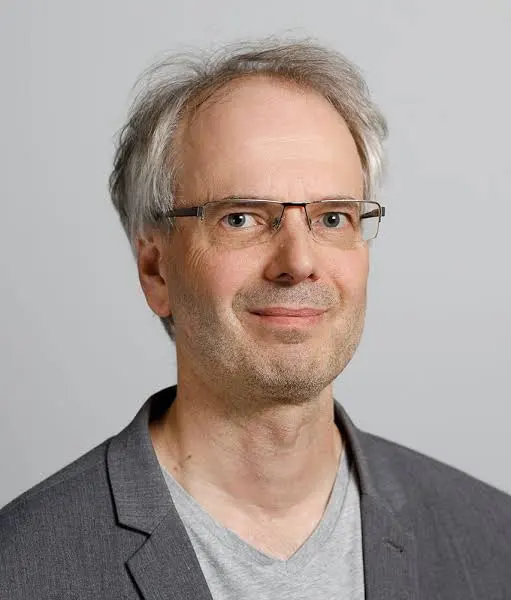
Foundation Models for Dynamical Systems Reconstruction
Daniel Durstewitz — Heidelberg University & CIMH Mannheim
Essentially all natural, social, and engineered systems that evolve in time can be described as dynamical systems at some level. In dynamical systems reconstruction (DSR), the goal is to learn surrogate models of the underlying dynamical rules from time series observations, with important applications in science and medicine.
Recently, foundation models for DSR trained across large corpora of dynamical systems have been developed, showing zero-shot and few-shot capabilities. These models can reproduce long-term statistical and attractor properties of previously unseen systems, provide insight into underlying dynamical mechanisms, and often outperform general time series foundation models in short-term forecasting, while requiring substantially lower computational and parameter costs.
In this talk, Daniel Durstewitz will give an overview of these models, how they are trained, how they may achieve out-of-domain generalization, and how they can be applied to irregular time series.
About
Daniel Durstewitz is Professor of Theoretical Neuroscience at Heidelberg University and the Central Institute of Mental Health (CIMH) in Mannheim. His research combines machine learning, dynamical systems theory, recurrent neural networks, and statistical modeling to understand complex neural, behavioral, and biomedical time series.
His work is highly relevant to ML4ITS, particularly for topics such as dynamical systems reconstruction, interpretable temporal modeling, foundation models for scientific data, and learning from irregular time series.
Accepted Contributions
Please note: All authors of accepted contributions are required to bring a poster presenting their work. Posters will be discussed during the dedicated Poster Session, which is also the main opportunity for questions and further discussion with participants.
Special Session: Time Series for Space Applications
-
Enhancing AI Downstream Performance in Space Applications via Time-Series Imputation and Synthetic Data Generation
Andrea Gobbi (Fondazione Bruno Kessler)*; Davide Molinari (Fondazione Bruno Kessler); Andrea Martinelli (Fondazione Bruno Kessler); Simone Toso (Fondazione Bruno Kessler); Jose Martinez Heras (Solenix); Evridiki Vasileia Ntagiou (European Space Operations Centre); Marco Cristoforetti (Fondazione Bruno Kessler) -
Drift-Aware Federated Continual Learning for Spacecraft Telemetry Time Series
Federico Antonello (esa)*; Bruno Sanchez (Barcellona Tec); Natalia Moreno Blasco (university of oulo); Nils kuhn (Stanford) -
Anomaly Detection in Space Operations: Design, Benchmarking, and Operational Experience with ATHMoS
Leonard Schlag (DLR)* -
On the Transferability of Model Selection for Time-Series Anomaly Detection to Satellite Telemetry using ESA-ADB
Kalifou René Traoré ( Leibniz Universität Hannover); Nils-Holger Kaul (German Aerospace Center (DLR))*; Joon Kim (German Aerospace Center (DLR)) -
How Far Do Time-Series Foundation Models Go? A Zero-Shot Evaluation on ESA-ADB Spacecraft Telemetry
Niwhashini Nandagopan (Indian Institute of Science)*; Kajeeth Kumar G (Indian Institute of Science); Ganesh Islavath (Indian Institute of Science); Pandarasamy Arjunan (Indian Institute of Science)
ML4ITS Main Session
-
When Low Error Misses Events: Training and Evaluating Sparse Time-Series Forecasters
Lorenzo Epifani (Politecnico di milano)*; Antonio Longa (The Arctic University of Norway); Alessandro Falcetta (University of Florence ); Filippo Maria Bianchi (The Arctic University of Norway); Manuel Roveri (Politecnico di Milano) -
A Time-Aware Bag-of-Receptive-Fields for Interpretable Irregular Time Series Classification
Francesco Spinnato (University of Pisa)* -
Lightweight Time-Series Representation for Battery State of Health Estimation from Graphene Sensor Data
Katarzyna Filus ( Institute of Theoretical and Applied Informatics Polish Academy of Sciences )*; Obinna Nwadiuto (University of Wolverhampton); Zlatka Stoeva (DZP Technologies Limited); Joanna Domanska (Institute of Theoretical and Applied Informatics Polish Academy of Sciences); Fideline Tchuenbou-Magaia (University of Wolverhampton) -
Evaluating Deep Multivariate Imputation Models on Wearable Device Data
Skye Goodman (University of Bristol); Nawid Keshtmand (University of Bristol)*; Roussel Desmond Nzoyem (University of Manchester); Leandro Junges (Centre for Systems Modelling and Quantitative Biomedicine, University of Birmingham); Peter Kissack (University of Birmingham); Yasser Qureshi (University of Warwick); Amberly Brigden (University of Bristol); Jeff Clark (University of Bristol) -
When Does Clustering Improve Imputation in Wearable Time Series?
Nawid Keshtmand (University of Bristol)*; Jeff Clark (University of Bristol ); Peter Kissack (University of Birmingham); Yasser Qureshi (University of Warwick); Amberly Bridgen (University of Bristol); Roussel Desmond Nzoyem (University of Manchester); Tassia Jones (University of Bristol); Leandro Junges (Centre for Systems Modelling and Quantitative Biomedicine, University of Birmingham) -
Legendre Flow Matching: Compact Generative Modeling of Irregular Time Series
Michail Spitieris (SINTEF)* -
Discover then Refine: Mode-Conditioned Scenario Forecasting for District Heating Demand
Malek Mahjoub (INSA LYON)*; Vasile-Marian Scuturici (INSA LYON); marc clausse (INSA LYON); Jean-Marc Petit (INSA LYON) -
A Differentiable ECG Representation for Arrhythmia Detection
Espen Haugsdal (Norwegian University of Science and Technology )*; Massimiliano Ruocco (Norwegian University of Science and Technology )
* indicates the primary contact author in the submission system.
Event Schedule
Please note: Due to the shortened Friday morning session, the workshop will start 15 minutes earlier than the standard conference schedule, at 10:15 AM instead of 10:30 AM, in order to fit within the allocated time slot.
Authors of regular papers will have 10 minutes for their presentation, while authors of short papers and presentation-only contributions will have 5 minutes. Questions and further discussion will take place during the poster session.
| Time | Session | Contribution |
|---|---|---|
| 10:15–10:20 | Opening | Opening & Introduction |
| Special Session — Time Series for Space Applications | ||
| 10:20–10:25 | Special Session | Introduction |
| 10:25–10:35 | Regular paper | Enhancing AI Downstream Performance in Space Applications via Time-Series Imputation and Synthetic Data Generation Andrea Gobbi |
| 10:35–10:45 | Regular paper | Drift-Aware Federated Continual Learning for Spacecraft Telemetry Time Series Federico Antonello |
| 10:45–10:50 | Short-format presentation | Anomaly Detection in Space Operations: Design, Benchmarking, and Operational Experience with ATHMoS Leonard Schlag |
| 10:50–10:55 | Short-format presentation | On the Transferability of Model Selection for Time-Series Anomaly Detection to Satellite Telemetry using ESA-ADB Nils-Holger Kaul |
| 10:55–11:00 | Short paper | How Far Do Time-Series Foundation Models Go? A Zero-Shot Evaluation on ESA-ADB Spacecraft Telemetry Niwhashini Nandagopan |
| 11:00–11:30 | Break & Posters | Coffee Break and Poster Session |
| 11:30–12:20 | Invited Talk | Foundation Models for Dynamical Systems Reconstruction Daniel Durstewitz — Heidelberg University & CIMH Mannheim |
| ML4ITS Main Part | ||
| 12:20–12:30 | Regular paper | When Low Error Misses Events: Training and Evaluating Sparse Time-Series Forecasters Lorenzo Epifani |
| 12:30–12:40 | Regular paper | A Time-Aware Bag-of-Receptive-Fields for Interpretable Irregular Time Series Classification Francesco Spinnato |
| 12:40–12:50 | Regular paper | Lightweight Time-Series Representation for Battery State of Health Estimation from Graphene Sensor Data Katarzyna Filus |
| 12:50–13:00 | Regular paper | Evaluating Deep Multivariate Imputation Models on Wearable Device Data Nawid Keshtmand |
| 13:00–13:10 | Regular paper | When Does Clustering Improve Imputation in Wearable Time Series? Nawid Keshtmand |
| 13:10–13:15 | Short paper | Legendre Flow Matching: Compact Generative Modeling of Irregular Time Series Michail Spitieris |
| 13:15–13:20 | Short-format presentation | Discover then Refine: Mode-Conditioned Scenario Forecasting for District Heating Demand Malek Mahjoub |
| 13:20–13:25 | Short paper | A Differentiable ECG Representation for Arrhythmia Detection Espen Haugsdal |
| 13:25–13:30 | Closing | Closing Remarks |
Partners